



How to choose a language learning format that fits your schedule
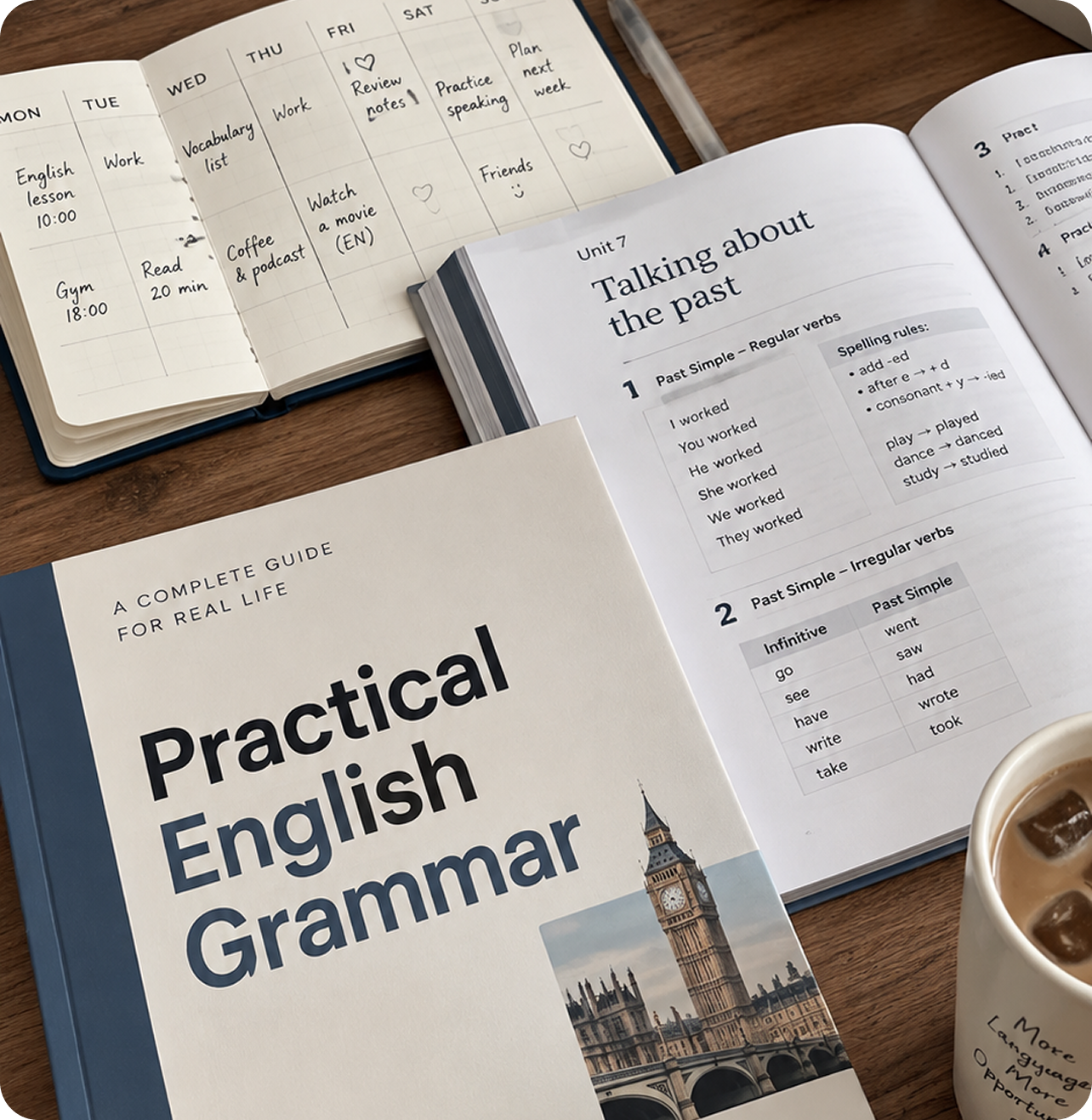
The format of your classes affects your learning results more than it seems at first glance. The same person can spend years stuck in a format that doesn’t suit them, or reach a confident level in a few months: the difference is often precisely how well the format fits their lifestyle.
- The format affects progress more than the intensity of the classes.
- With a busy schedule, compact and asynchronous formats are a great help.
- Individual, group and pair classes each have their own logic of effectiveness.
- Budget and learning goal are the two key factors when choosing.
- The format can, and should, be changed as you learn.
1. Individual, pair and group classes: what’s the difference
The individual format is the most exclusive: the teacher’s full attention is on you, the pace of the class adapts to your speed of learning, and the content of the lesson to your interests and your specific goal, whether that’s preparing for a move or going over work vocabulary. It is the format for those who value maximum focus and flexible scheduling.
Pair classes keep a high level of attention on each participant but add an element of shared practice: you can come with your partner, a friend or a colleague, or let us find the right pair for you. This format creates mutual accountability: studying as a pair is easier than studying alone, and one person’s progress pushes the other along.
Group classes offer a different dynamic: a group of up to 4 people creates a lively exchange of experience between students, and speaking practice happens with several conversation partners at once. It is the most affordable format, because the cost of the class is shared between the participants.
Who each is for: individual classes suit people with a very specific goal, an unstable schedule or a wish to study at their own pace without looking at others; pair classes suit those who want to learn with a partner, a friend or a colleague and keep each other motivated; group classes suit those who value company, sharing experience and a more affordable budget.
What to keep in mind: in a group, the pace is set by the average level of the participants, so it is worth finding out in advance how the group is formed and whether it is possible to move to another one if needed.
2. Compact 30-minute classes: practice without overloading your schedule
This is a format for people who find it hard to set aside a full hour but for whom it is important to study often. Compact classes take place 3 to 4 times a week, 30 minutes each, and put the emphasis on the frequency of contact with the language.
Why it works: short, frequent contact with the language fixes the material in your memory better than long, infrequent classes, and this format is easier to fit into a busy work schedule without the stress of lacking time.
Who it is for: those who want regular speaking practice with limited free time, for example with a very full work schedule.
3. Asynchronous classes: language without a fixed schedule
The asynchronous format is classes without a set time. Several times a week, a topic with grammar, vocabulary, videos and interactive exercises arrives via chat through links, and once a day, or once per period, the teacher gives personalized feedback on the answers and audio messages you send.
Who it is for: those who can’t fit around a fixed class time because of shifts, travel, time zones or an unpredictable schedule, but want to move forward systematically.
What is important to understand: this format requires independence in doing the tasks between one round of feedback and the next; here, progress depends directly on how regularly you send your own answers.
4. Online and in person: what’s good to know
At SAYSAY LINGO, most classes are online. The in-person format in Barcelona is available for Spanish and French: in-person classes are taught by Marianna, who also teaches online, like the rest of the teaching team.
A practical tip: for speaking practice, online classes work just as well as in-person ones, and schedule flexibility and the time saved on commuting often become the deciding factor when choosing a format.
5. How to choose a format based on your goal and schedule
Your learning goal and your real workload are the two main reference points. For fast speaking fluency, regular practice matters; for a busy schedule, a compact or asynchronous format; for comfortable long-term learning, a group or a pair, if budget and company are your priority.
Step by step: define your learning goal, honestly assess the real free time you have each week, choose a format based on your schedule and goal, and not only on price, and be ready to reconsider the format if the current one stops suiting you.
Self-check list
- I’ve defined my main learning goal (fluency, an exam, maintaining my level)
- I’ve assessed the real free time I have each week
- I’ve considered a compact or asynchronous format if my schedule is busy
- I’ve taken into account that in-person classes in Barcelona are available for Spanish and French
- I’ve considered the course “Spain and Spanish: first steps” if I’m interested in a self-paced option
- I’ve compared the budget of the different formats
- I’m ready to reconsider the format if the current one stops suiting me
There is no ideal learning format: there is the format that fits your schedule, your budget and your goal at this stage. From compact 30-minute classes to asynchronous learning by chat, the variety of formats lets you build the language into your life even if you have little free time.
SAYSAY LINGO offers individual, pair, group, compact and asynchronous classes.
Most classes are online, and in Barcelona you can study Spanish and French in person. Start with a trial class and find out which format really fits your schedule.